Stained Glass Wall Art: Modern Metal Posters with Cathedral Light
Cathedral windows meet modern walls. Thor, Valkyrie, D20 dice glowing with arcane light — here's how to use stained glass metal posters in a real home, with real lighting.
Disclosure: This article contains affiliate links to Displate. If you purchase through these links, we earn a commission at no extra cost to you. All designs shown are original creations by Lineer.
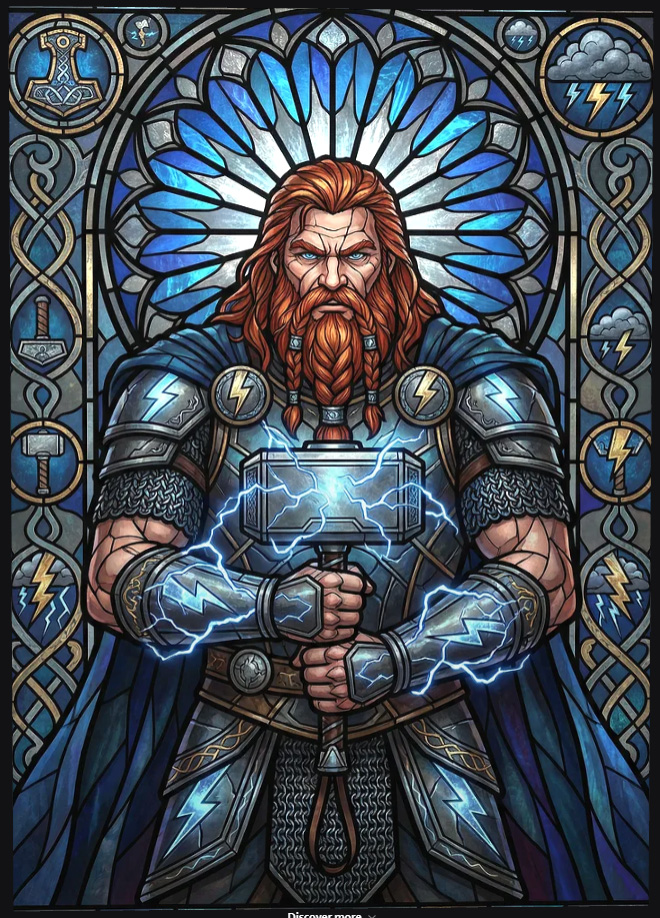
Stained glass has been stopping people in their tracks for 900 years, and it's back in modern interiors — but not the way you think. Forget heavy cathedral panels bolted into your wall. The new wave of stained glass wall art is printed on metal, hangs with a magnet, and gives you the jeweled-light effect of a rose window without needing a chapel to put it in.
I design metal posters specifically for this style — Thor raising Mjolnir against thundering sky panels, Valkyrie in shimmering armor, D20 dice glowing like they've been blessed at an altar. Here's how to use modern stained glass art in a real home, what actually works, and what to avoid.
Quick Answer
- Modern stained glass wall art is high-contrast digital art rendered in leaded-glass style — thick black outlines, jewel-tone color panels, and bold geometric composition.
- Metal is the ideal surface for this style — the metallic sheen mimics how light passes through actual stained glass, something paper and canvas cannot replicate.
- Best placement: walls that catch natural or lamp light from the side or front. Direct backlighting (LED strip behind the poster) is the single biggest upgrade for this aesthetic.
- Top themes:Norse mythology (Thor, Valkyrie, Viking warriors), D&D fantasy (D20 dice, dragons, elves), and animals (panthers, bunnies, military pigeons). Each carries its own room vibe.
- Price range: $44–89 per metal poster, comparable to mid-quality canvas prints but with far more visual impact under ambient light.
Why Stained Glass Works So Well on Metal
Traditional stained glass gets its magic from one thing: light passing through colored glass and leaded cames, fragmenting the image into jewel-like panels. The problem is that to experience it, you need a window, sunlight, and a willingness to build a 12th-century cathedral in your living room.
Metal printing solves this. The metallic surface reflects ambient light the same way real glass refracts it — from lamps, monitors, candles, or a simple LED strip — creating the shimmer and luminosity that paper and canvas physically cannot. Dark backgrounds go deeper on metal, the saturated jewel tones of stained glass posters stay vivid, and the thick black leading lines stay crisp at any viewing distance.
If you want the full material comparison, I broke down the differences in my canvas vs metal prints guide. For stained glass style specifically, metal isn't just better — it's the only format that gets the effect right.
The Three Themes That Work
Not every subject translates well to the stained glass treatment. The style demands bold silhouettes, dramatic poses, and subjects that reward being broken into colored panels. Three themes consistently deliver:
Norse Mythology
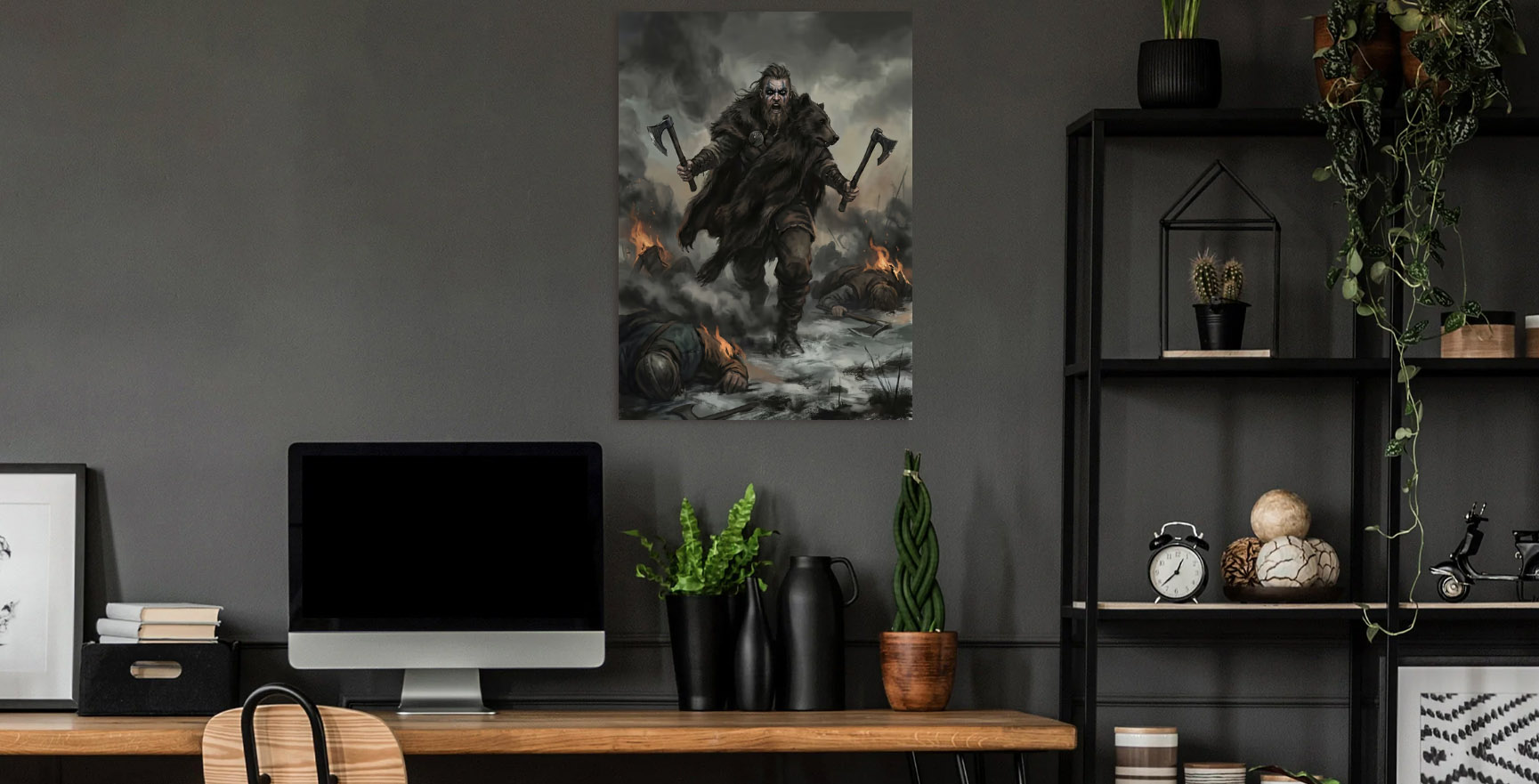
The Norse gods were originally depicted in wood carvings, runestones, and tapestry — but they translate beautifully to stained glass. There's something about Thor mid-swing with Mjolnir, or a Valkyrie in shimmering armor, that belongs in leaded panels and jeweled color. The mythology itself has that mix of reverence and drama that cathedral windows were built for. If you're building a viking inspired room, one Norse stained glass piece above the bed or sofa does more than three traditional pieces combined.
D&D and Fantasy
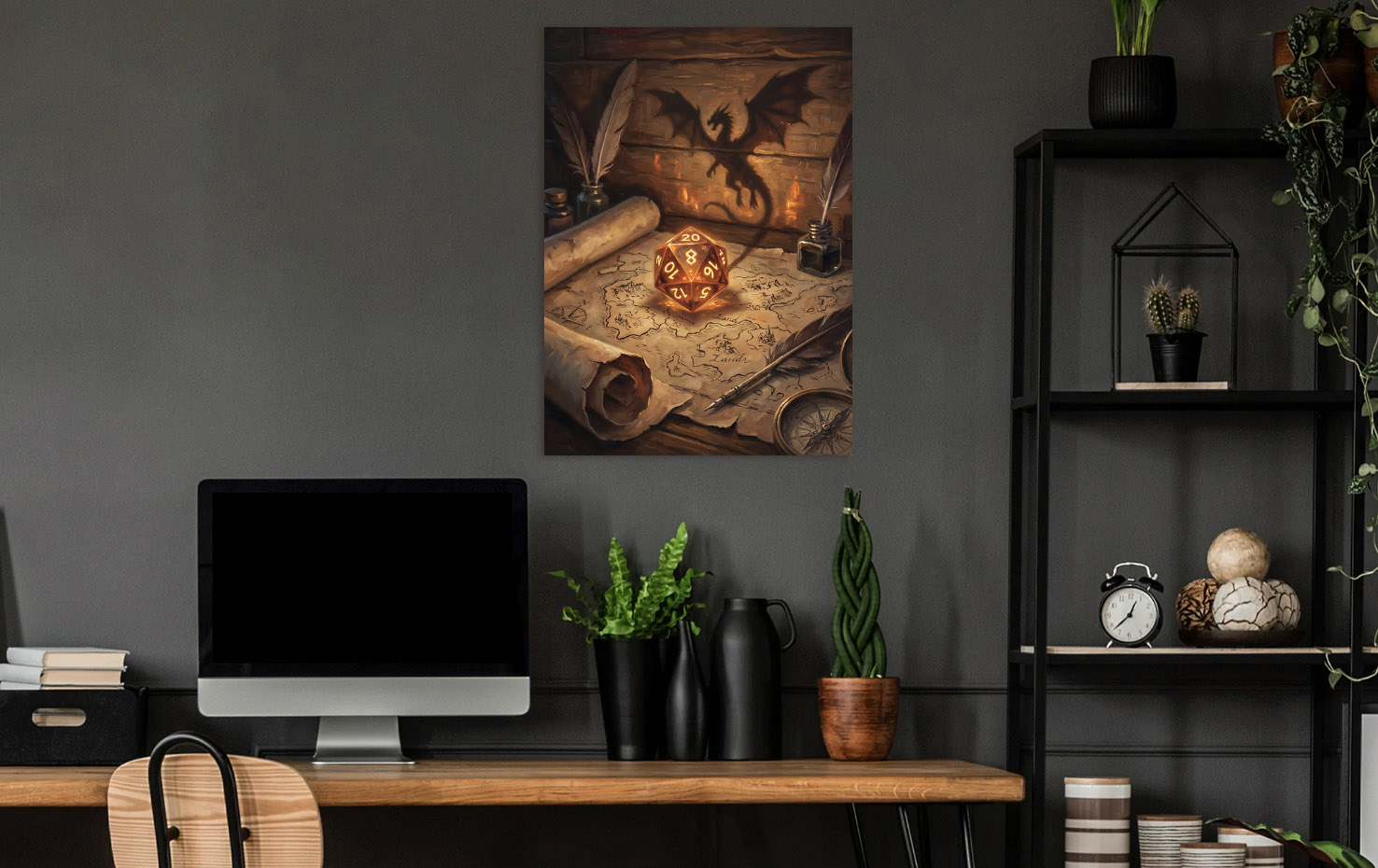
This is where stained glass gets genuinely fun. A D20 glowing with arcane light, a dragon coiled into a leaded panel, an elf warrior framed by lead cames — these designs turn tabletop fantasy into art that belongs in a temple. For game rooms, dedicated DM caves, or any space where you want to signal "I take this seriously without taking myself seriously," fantasy stained glass is the move. Pair it with my main D&D wall art collection for a layered gallery wall.
Animals and Wildlife
The most underrated category. A black panther prowling through emerald panels, a bunny framed by wildflowers, a squirrel in rose-window glass — these pieces work in rooms where fantasy or mythology would feel too heavy. A stained glass animal print in a nursery, reading nook, or bathroom brings the craft and color of cathedral art to spaces that usually get nothing but generic decorator art.
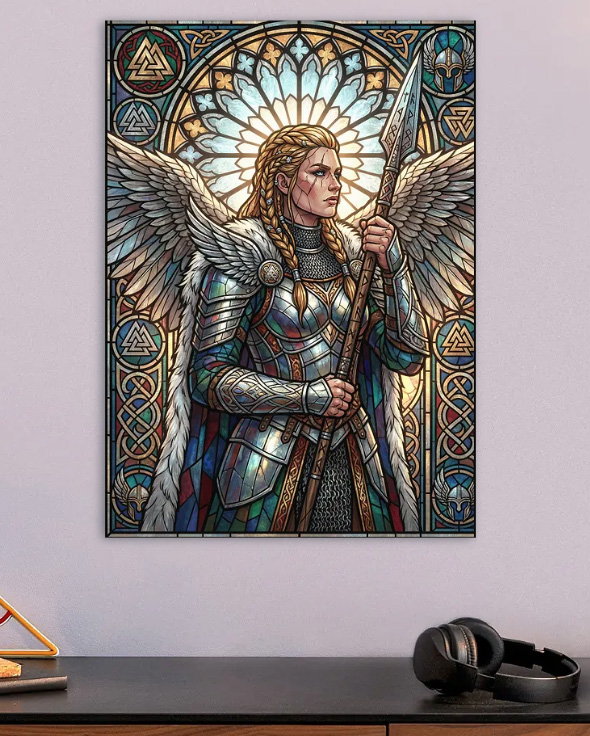
Featured Stained Glass Designs
Three of the most popular pieces in the collection — click through for full-size previews and pricing on Displate.
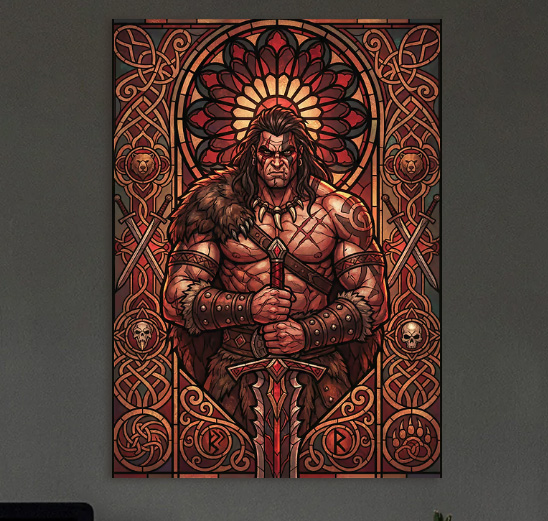
Where to Hang Stained Glass Wall Art
Placement matters more with this style than with almost any other. Stained glass art wants to interact with light — it looks flat and boring in a dim corner, and comes alive when lamps, monitors, or LED strips hit it. The rules:
- Facing a window or lamp: Walls that catch ambient light from the side or front give you the shimmer effect without any extra setup. South-facing walls are ideal in daylight rooms
- Above a lamp or sconce: A table lamp with a warm 2700K bulb placed directly below a metal stained glass poster creates an upward glow that mimics candles in a chapel
- With a backlighting LED strip: This is the biggest single upgrade you can make. A cheap warm-white LED strip ($10–15) tucked behind the poster creates a halo effect that makes the art look genuinely illuminated — like the window of a small cathedral. It's transformative
- Gallery walls: Three or four stained glass pieces in a row work beautifully because the repeated leaded-glass aesthetic creates a rhythm, similar to actual cathedral window sequences
- Bathrooms and reading nooks: Overlooked spots where stained glass animal art thrives. The style pairs naturally with intimate, contemplative spaces
Room Ideas by Theme
Game room / D&D space
Go heavy on the Fantasy stained glass sub-collection. Two or three D20 dice pieces above a gaming table, paired with a stained glass dragon on the opposite wall. Combine with traditional D&D wall art for layered depth. If you're planning a full gaming room, read my gaming room wall art guide — stained glass fits naturally into fantasy gaming setups.
Norse-themed living room or bedroom
Thor or Valkyrie above the bed or sofa as your single statement anchor. Pair with dark wood furniture, wool throws, and warm lighting. See my full viking inspired room guide for the complete aesthetic breakdown — stained glass slots perfectly into a Norse-themed space as the "sacred" element.
Dark aesthetic bedroom
Any of the Norse pieces against a dark painted wall. The contrast between the jewel tones and the matte dark background is exactly what dark aesthetic rooms need — something to anchor the eye without breaking the moody atmosphere. My dark aesthetic room ideas guide covers the full color and lighting palette.
Reading nook or bathroom
This is where the Animals sub-collection earns its keep. A stained glass bunny or squirrel framed by wildflowers in a reading corner, or a stained glass military pigeon in a small hallway. These pieces bring craft and color to spaces that usually get generic art — or no art at all.
Stained Glass vs. Traditional Wall Art
The main reason people gravitate to stained glass-style art isn't just aesthetics — it's the way it transforms under changing light. A single piece can feel completely different at noon versus sunset versus lamplight. Compared to traditional wall art:
- vs. abstract prints: Stained glass gives you bold subject matter and recognizable imagery while retaining the graphic punch of abstract art. More personality, same visual weight
- vs. photography: Photography looks best under even lighting; stained glass looks best under directional lighting. If your room has a strong lamp or window light source, stained glass wins
- vs. standard digital art posters: The leaded-glass style adds instant texture and craft. Same digital origin, but the stained glass treatment reads as intentional in a way generic digital art doesn't
- vs. actual stained glass panels: Real stained glass costs $400–5,000+ per custom piece, requires professional installation, and only works in front of light sources. Metal stained glass prints deliver 80% of the effect at 10% of the cost, and you can hang them anywhere
For the full material deep-dive, see my canvas vs metal prints breakdown.
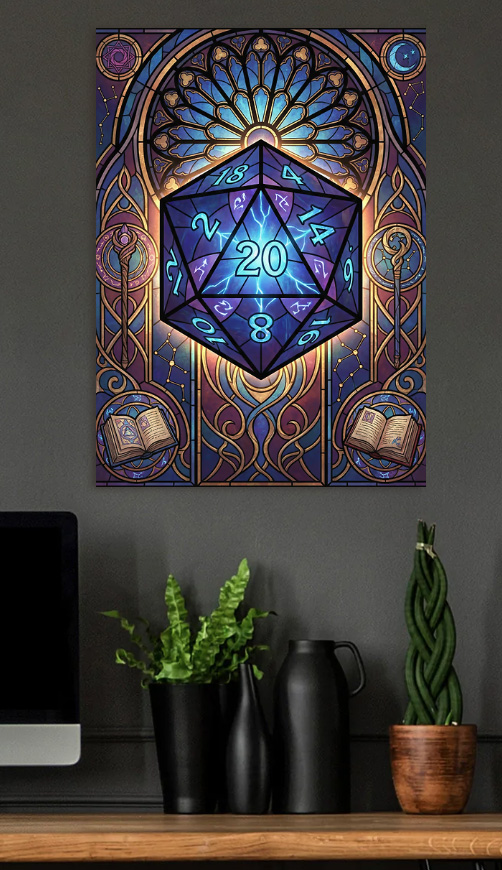
Budget Guide: Building a Stained Glass Gallery
Stained glass wall art gets more impressive the more you layer it, but you don't need to buy everything at once. Priority order for maximum impact per dollar:
- One statement piece ($44–89).Pick the theme that matches your room and hang it somewhere it catches light. Norse for bedrooms or fantasy rooms, D&D for game rooms, animals for reading nooks or bathrooms
- Warm LED backlighting strip ($10–15). This single $15 upgrade more than doubles the visual impact. A cheap warm-white LED strip from Amazon, stuck behind the poster, creates a halo glow that transforms the art
- Second complementary piece ($44–89). Stick to the same sub-collection for cohesion — Norse + Norse, or fantasy + fantasy. Mixing too many themes breaks the stained glass rhythm
- A third piece for a gallery wall ($44–89). Three stained glass pieces in a row, at the same height, with matching spacing. This is where the style really sings. The repeated leaded-glass aesthetic becomes a deliberate visual pattern
- Room lighting adjustments ($20–50). Swap overhead bulbs to 2700K warm white, add a table lamp below the main piece, and consider blackout curtains to give yourself control over the ambient light. Stained glass rewards intentional lighting
Pro tip: Displate runs sales year-round with 20–35% off, and Club membership unlocks up to 34% off every purchase. Check my Displate discount codes guide before paying full price. If you're new to metal posters entirely, start with my honest Displate review.
Mistakes to Avoid
The stained glass style is forgiving up to a point, but a few things consistently kill the effect:
- Flat, diffuse overhead lighting only. The art needs directional light to shimmer. A ceiling panel throwing even light across the whole room washes out the metallic effect and flattens the image
- Hanging too high. Stained glass rewards close-up viewing — the detail in the leading lines, the saturation of individual panels. Hang it at eye level when seated, not ceiling height
- Mixing stained glass with clashing art styles. A stained glass dragon next to a minimalist line drawing creates visual conflict. Pair stained glass with complementary dark/fantasy art, or with solid dark walls — not with contrasting styles
- Ignoring the frame edges. Stained glass art has strong geometric compositions. Center it carefully, keep equal margins around all sides, and avoid tilting. Crooked stained glass looks worse than crooked abstract art because the leading lines make the tilt obvious
- Treating it like a print. Paper or canvas versions of stained glass art lose the entire point. Without a metallic surface that catches light, the leaded-glass aesthetic becomes just another illustration. Metal is not optional for this style
The History, Briefly
Stained glass as an art form dates to at least the 7th century, with the peak era running from roughly 1150 to 1250 during the Gothic cathedral boom (see Wikipedia: Stained glass). The Metropolitan Museum of Art's curatorial essay on the medium traces how French cathedrals like Chartres and Sainte-Chapelle set the visual vocabulary that we still recognize today — bold black leading, jewel-tone glass panels, and symbolic subject matter (see Met Museum: Stained Glass in Medieval Europe). The craft has gone through several revivals — most notably the Arts and Crafts movement in the late 19th century via artists like Louis Comfort Tiffany. What we're doing now with digital stained glass on metal is the latest revival: the same compositional principles applied to modern themes and printed on a surface that finally does the light effect justice without needing a cathedral window.
Ready to Add Cathedral Light to Your Walls?
Every piece in my stained glass wall art collection is designed around the leaded-glass aesthetic: bold outlines, jewel-tone panels, and subject matter that rewards being translated into this ancient visual language. Organized into three sub-collections:
- Norse & Viking — Thor, Valkyrie, Viking warriors, and a Viking duck for good measure
- Fantasy & D&D — D20 dice, dragons, elf warriors, steampunk knights
- Animals — black panther, bunny, squirrel, military pigeon
Every design is original, printed on premium Displate metal, and mounts with a magnet system that leaves no holes in your walls. Start with one piece, add a warm LED strip behind it, and watch the wall transform the first time the light catches it right.
Shop the Look
Browse metal wall art from the collections mentioned in this article. Prices start from $44.
Frequently Asked Questions
What is stained glass wall art on metal?
Stained glass wall art on metal is digital art designed in the traditional stained glass style — bold black outlines (representing lead cames), jewel-tone color panels, and dramatic symbolic subject matter — printed on premium aluminum metal posters rather than actual glass. The metallic surface reflects ambient light the way real stained glass refracts it, creating a shimmer and luminosity that paper and canvas cannot replicate. Modern stained glass metal posters combine the 900-year-old visual language of cathedral windows with contemporary themes like Norse mythology, D&D fantasy, and wildlife — all at a fraction of the cost of actual stained glass panels, with no installation or special lighting required. The style works especially well for high-contrast digital art because the bold leading lines and saturated panels stay crisp at any size.
Where should I hang stained glass wall art?
Placement matters more for stained glass than almost any other wall art style because the aesthetic depends on light interaction. The best spots are walls facing a window or a lamp, where ambient light hits the metallic surface and creates shimmer. South-facing walls are ideal in daylight rooms. Above a table lamp or wall sconce with a warm 2700K bulb works beautifully — the upward glow mimics candles in a chapel. The single biggest upgrade is adding a cheap warm-white LED strip ($10-15) behind the poster for backlighting — this creates a halo effect that makes the art look genuinely illuminated. Avoid dim corners, walls with only flat overhead lighting, or spots where furniture will partially block the piece. For placement height, hang at eye level when seated rather than ceiling height, since stained glass rewards close-up viewing of the leading lines and panel detail.
Is metal better than canvas for stained glass art?
For stained glass style specifically, metal is not just better — it's the only surface that gets the effect right. The entire point of stained glass as an art form is light passing through colored material to create shimmer and luminosity. Canvas absorbs light into its fabric weave, which flattens the jewel tones and softens the bold leading lines. Paper sits even flatter. Metal, by contrast, reflects ambient light the same way real stained glass refracts sunlight, creating the shimmer effect that gives the style its magic. Dark backgrounds go deeper on metal, the saturated panel colors stay vivid, and the thick black outlines stay crisp at any viewing distance. Paper and canvas versions of stained glass art technically exist, but they lose the entire visual point — without a metallic surface, the leaded-glass aesthetic becomes just another flat illustration.
What themes work best for stained glass wall art?
Three themes consistently deliver in modern stained glass metal posters. First, Norse mythology — Thor with Mjolnir, Valkyrie in armor, Viking warriors — because the drama and reverence of Norse legend pairs perfectly with cathedral-style visual language. Second, D&D and fantasy subjects — D20 dice glowing with arcane light, dragons coiled into leaded panels, elf warriors framed by lead cames — which bring tabletop fantasy into 'sacred temple art' territory. Third, animals and wildlife — panthers, bunnies with wildflowers, squirrels, and even the World War I military pigeon — which work beautifully in rooms where heavier themes would feel out of place (nurseries, reading nooks, bathrooms). The common thread is that good stained glass subjects have strong silhouettes, rewards being broken into color panels, and carry some emotional weight. Subjects that lack those qualities look weak in leaded-glass style.
How much do stained glass metal posters cost?
Displate metal posters in stained glass style start from $44 for M size (17.7" x 12.6") and $89 for L size (26.6" x 18.9"). Compared to actual stained glass panels — which run $400 to $5,000+ per custom piece, require professional installation, and only work in front of light sources — metal stained glass prints deliver about 80% of the visual effect at 10% of the cost. They're comparable in price to mid-quality canvas prints but with far more visual impact under ambient light. With a Displate Club membership (up to 34% off every purchase), the M size drops to around $29. Seasonal sales throughout the year add another 20-35% off, with Black Friday being the biggest deal of the year. For a gallery wall of three stained glass pieces, the realistic budget is $130-270 at full price, or closer to $85-180 with Club membership or seasonal discounts.
Can stained glass wall art work in a small apartment?
Yes — small apartments actually benefit more from committed stained glass aesthetics than large spaces. In a studio or small bedroom, one large stained glass metal poster (L-size, 26.6" x 18.9") above the bed or sofa creates a strong visual anchor without requiring an entire room makeover. The bold leading lines and jewel-tone panels work at any size because the style is designed for impact rather than subtle detail. For renters, Displate's magnet mounting system is especially valuable because you can install large wall art without drilling holes, and the adhesive mount comes off cleanly when you move out. The key for small spaces is restraint — pick one strong piece, add a cheap LED backlighting strip for the halo effect, and let it carry the visual weight of the room instead of trying to build a full gallery wall in 200 square feet.
More Articles
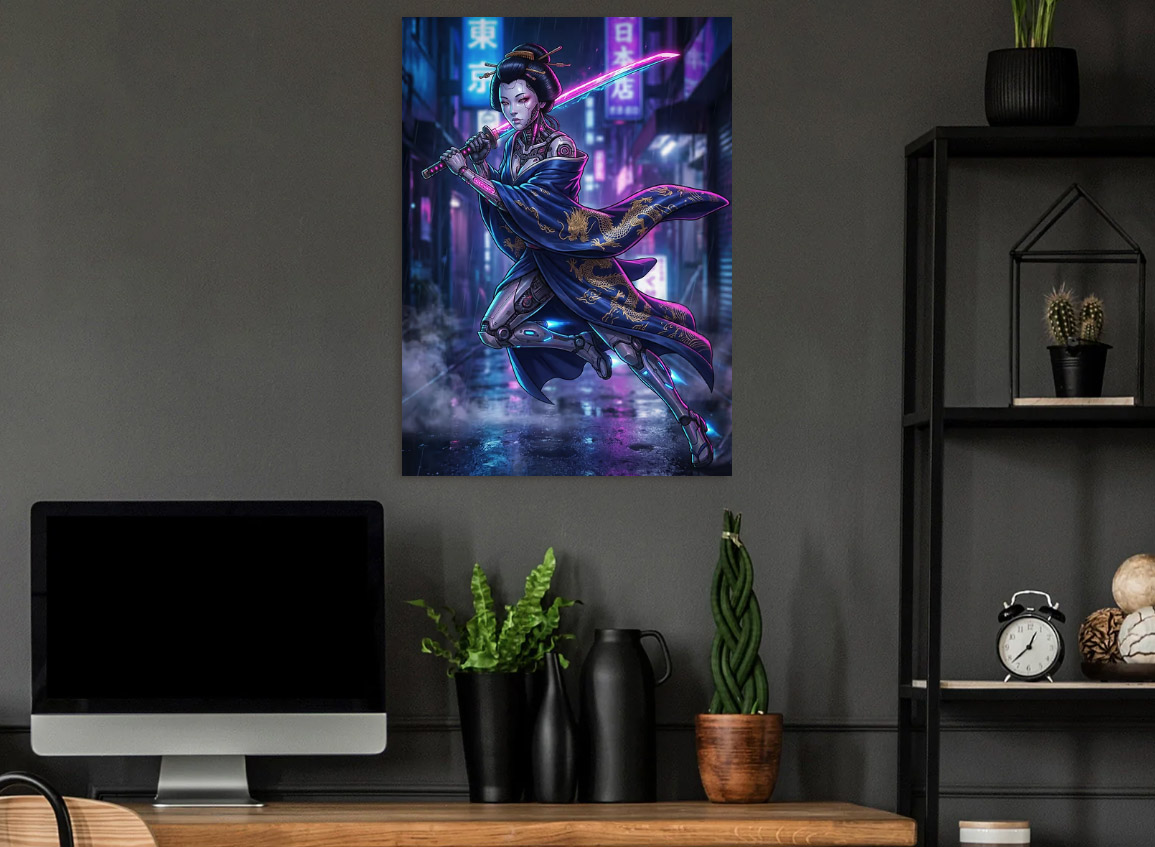
Best Cyberpunk Room Decoration Ideas for 2026
2026-03-23
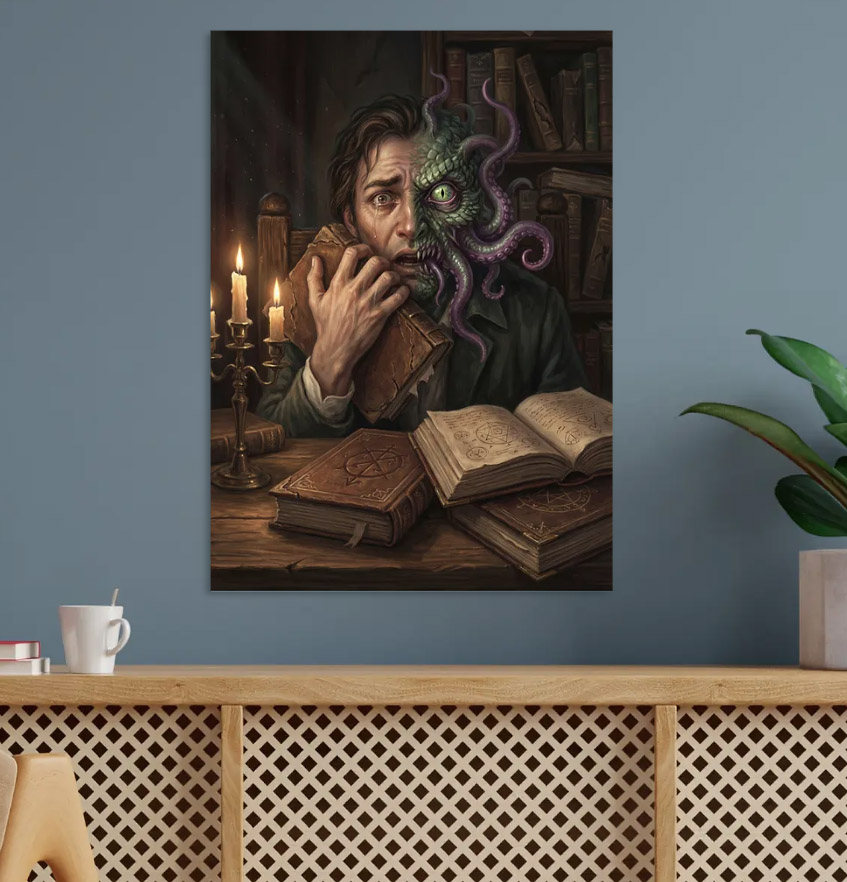
Dark Aesthetic Room Ideas: Gothic, Moody & Dark Academia Decor
2026-03-23

Is Displate Worth It? Honest Review from a Displate Artist
2026-03-23
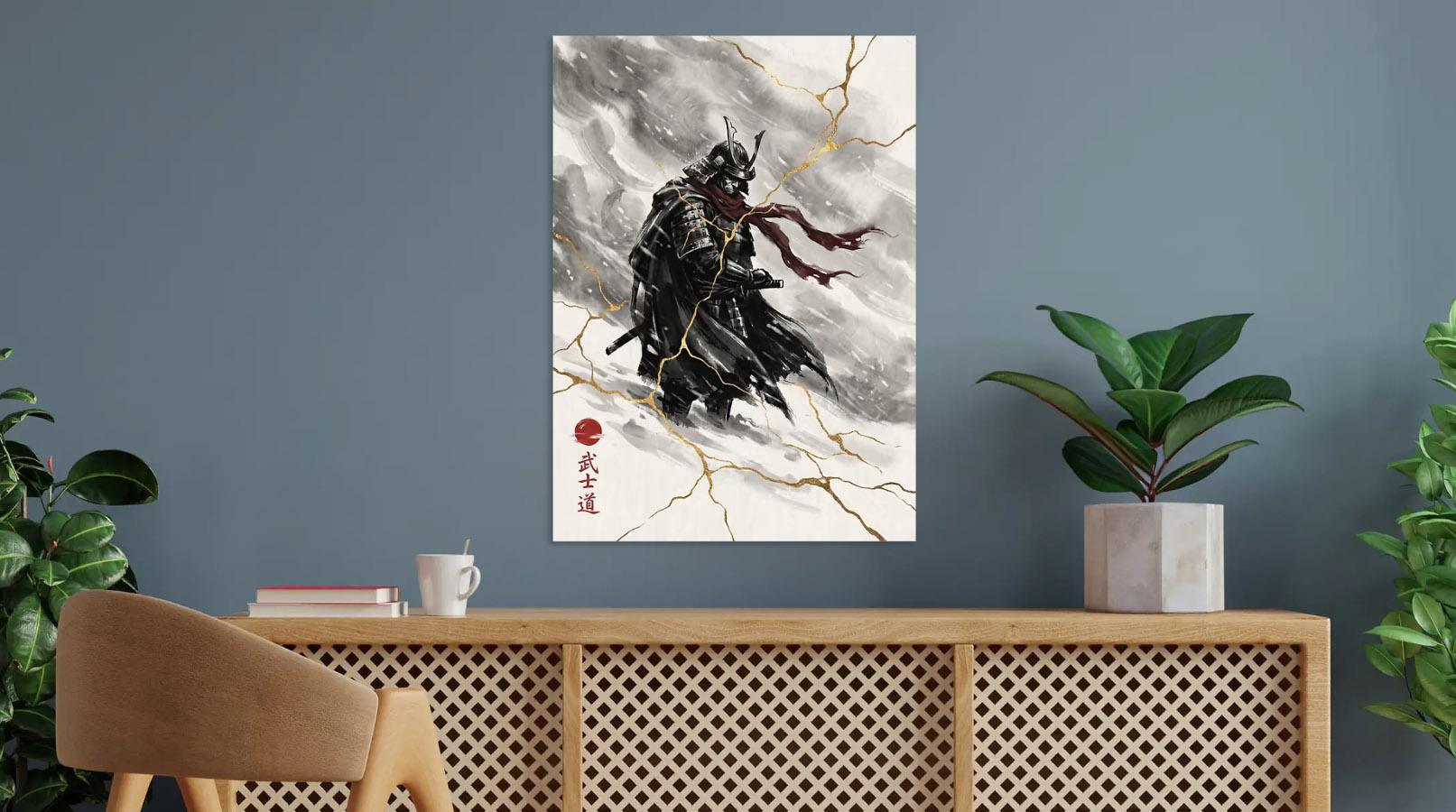
Canvas vs Metal Prints: Which Is Better for Wall Art?
2026-03-23
Displate Discount Codes & Deals 2026
2026-03-23
Best Wall Art for Gaming Room & Game Room Decor Guide
2026-03-29
Viking Home Decor & Inspired Room Ideas: A Norse Aesthetic Guide
2026-04-05
Military Wall Art & Home Decor: A Room-by-Room Guide
2026-04-05