Man Cave Wall Art: Ideas & Decor Guide from a Metal Artist
A man cave with bare walls is just a spare room with a TV. Here's how to pick man cave wall art that ties the whole space together — themes, sizing, placement, and what to skip.
Disclosure: This article contains affiliate links to Displate. If you purchase through these links, we earn a commission at no extra cost to you. All designs shown are original creations by Lineer.
A man cave with bare walls is just a spare room with a TV in it. You can have the leather chair, the bar cart, the mini fridge, the sound system — and none of it will matter if your man cave wall art is missing, scattered, or clearly an afterthought. Wall art is what separates serious man cave decor from a dorm room with a pool table.
I design metal wall art for exactly this kind of room, and I've been doing it long enough that Displate put one of my pieces on their homepage Bestsellers section — so the design standards I'm about to lay out aren't theoretical, they've been validated by actual buyers. I've made 245+ original metal posters across cyberpunk, dark fantasy, Viking, military, and samurai themes, and this guide is the short version of everything I've learned about picking man cave wall art that actually pulls a room together.
Quick Answer (2026)
The best man cave wall art is dark, high-contrast metal posters committed to a single theme — dark fantasy, cyberpunk, Viking, military, or samurai. Start with one L-size (26.6" × 18.9") anchor piece at seated eye level (57–60 inches from the floor), hang it with Displate's magnet mount, add warm 2700K lighting, and expand into a 2–3 piece gallery over time. Budget: a fully-styled feature wall runs under $200 with a Displate Club membership.
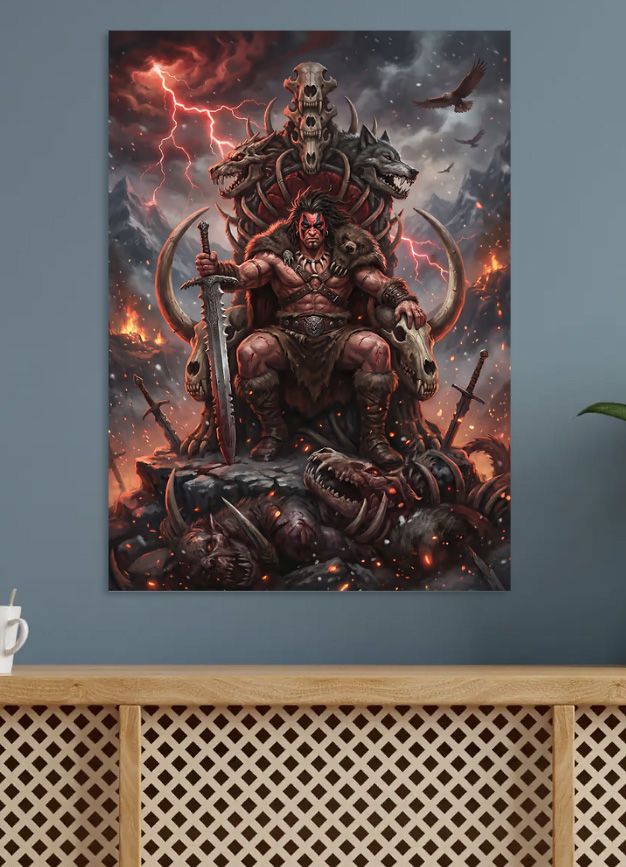
Featured: Barbarian King on Skull Throne — one of my dark fantasy pieces, from $44 on Displate
What Actually Separates a Man Cave from a Spare Room
Most "man caves" I see online are spare rooms with a few stereotypical props — a neon beer sign, a framed jersey, a pool table, and nothing else connecting them. The result looks like a discount bar, not a space you'd voluntarily hang out in.
A real man cave has one trait: commitment to a mood. Whether that's dark academia, neon cyberpunk, medieval mead hall, or a historian's war-room study — the room picks one direction and everything in it supports that direction. The man cave posters and art pieces on the walls are what makes that commitment visible the second someone walks in.
Metal wall art is the right material for a man cave specifically because the metallic surface plays with every light source in the room — warm lamps, TV glow, LED accent strips, neon signs. The art literally shifts depending on what's happening in the room, which canvas and paper simply cannot do. This is also why digital art in cyberpunk, dark fantasy, and military categories looks its sharpest as man cave metal art rather than as traditional canvas prints.
How to Decorate a Man Cave with Wall Art
If you're wondering how to decorate a man cave without making it look like a fraternity basement, the playbook is simpler than most home-decor advice makes it sound. There are five steps, in order, and skipping any of them is what produces the cluttered "too many interests" look.
- Decide the mood first. Grounded historical? Dark mythological? Neon futuristic? The mood picks the theme — not the other way around.
- Pick one L-size anchor piece and hang it in the highest-visibility spot.
- Switch to warm 2700K lighting — this alone transforms the room more than anything else.
- Expand into a gallery of 2–3 pieces from the same collection, on the same wall or adjacent walls.
- Add small aged-metal accents (brass lamp, iron candle holder, leather details) to reinforce the mood.
The rest of this guide goes deep on each step, starting with the hardest and most important one: which theme to commit to.
Best Man Cave Wall Art Themes
Not every art style belongs in a man cave. The ones that consistently work share dark backgrounds, high contrast, and masculine weight — the opposite of the soft neutral prints that fill most living rooms. Here are the nine themes I design for that work every time.
Dark Fantasy
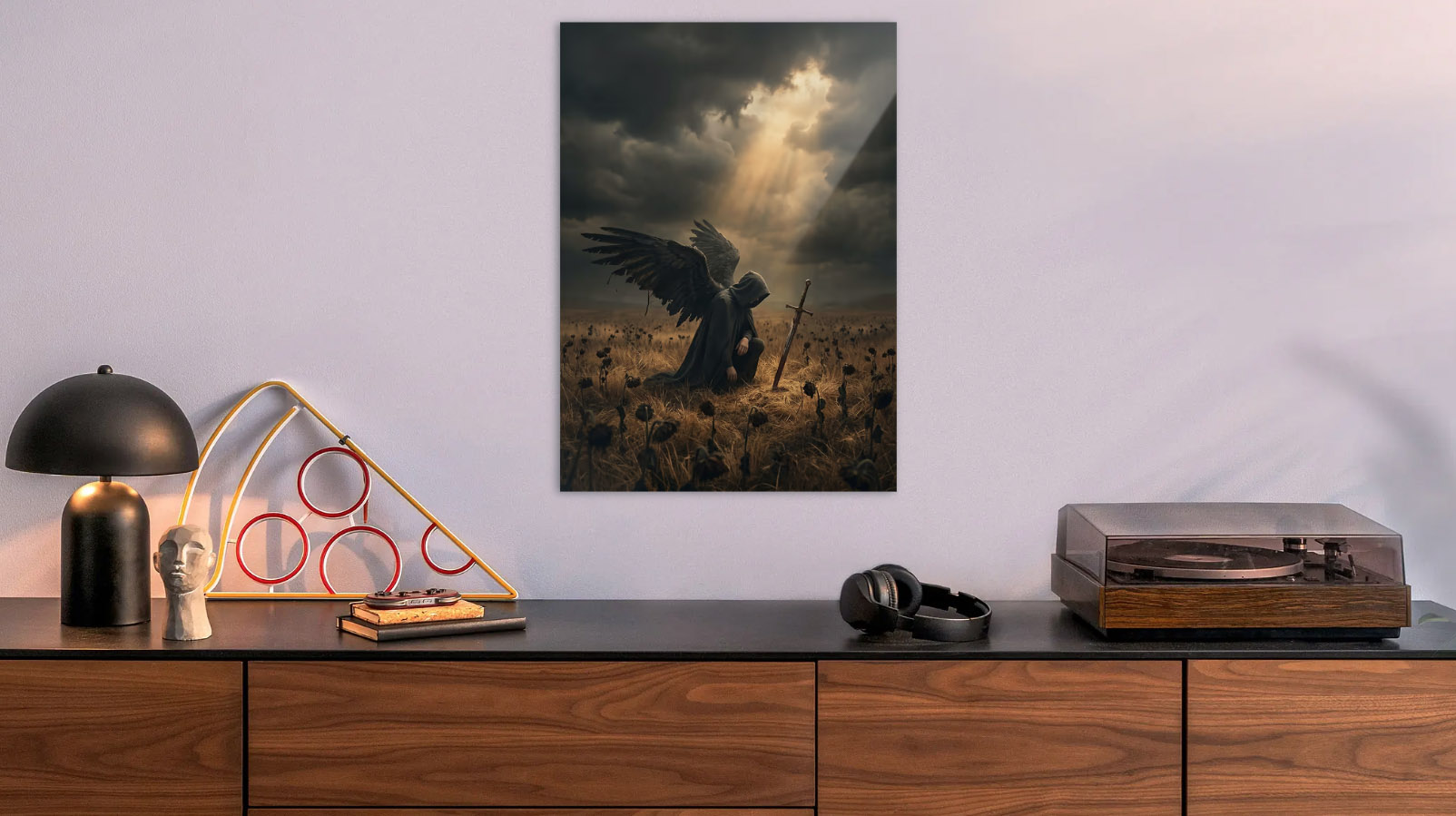
Barbarian kings on skull thrones, fallen angels with swords, dragons in mountain fortresses. Dark fantasy brings mythological weight and drama to a room in a way nothing else does, and it pairs especially well with leather chairs, whiskey shelves, and warm firelight-style lighting. One of my own designs, Barbarian King on Skull Throne, is built exactly for this kind of room — the metal catches warm lamp light and makes the armor highlights feel alive. Browse the full dark fantasy wall art collection for the heavy-hitters, and if you're going full moody, read my dark aesthetic room guide for palette and lighting tips.
Cyberpunk & Neon
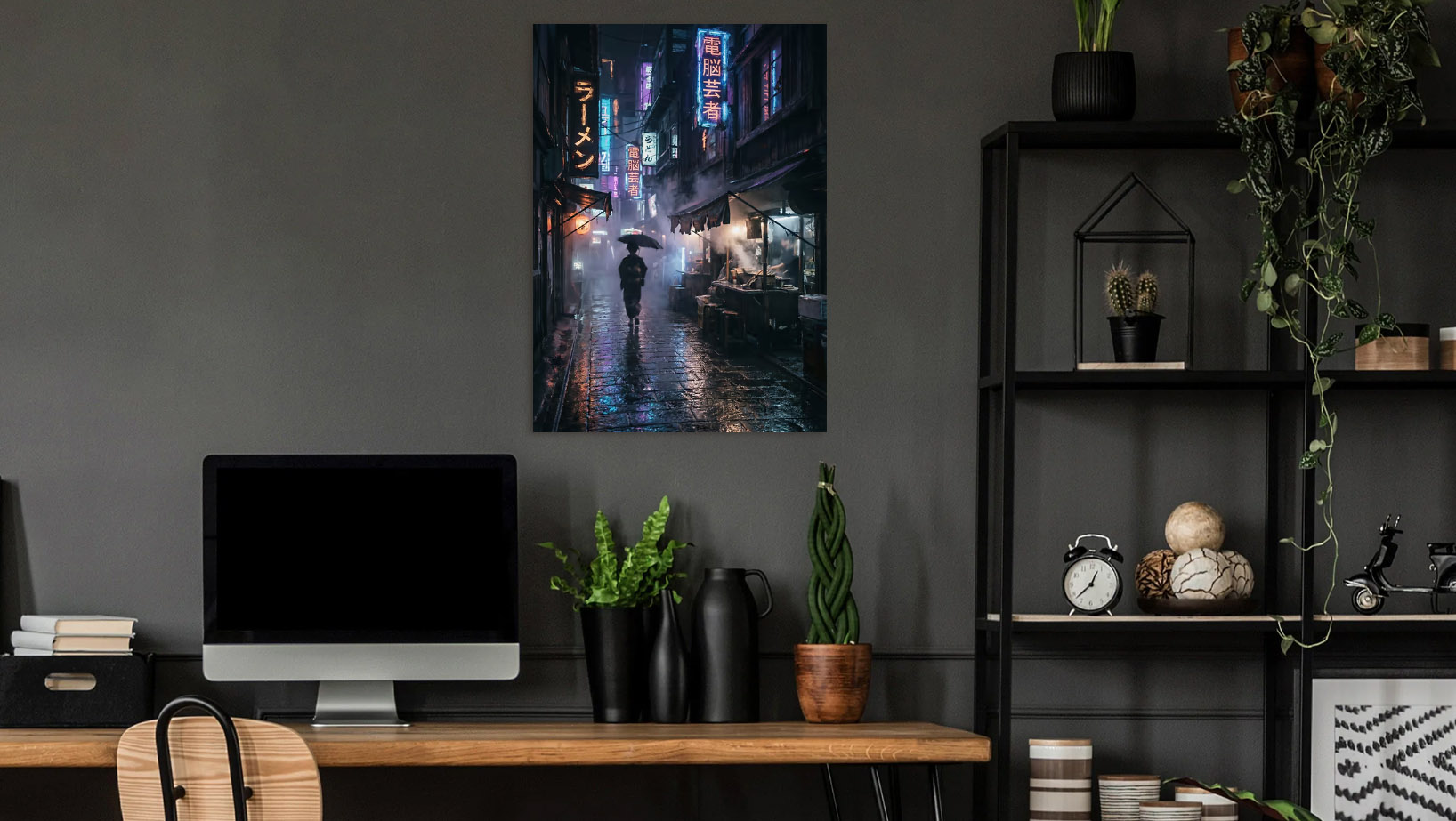
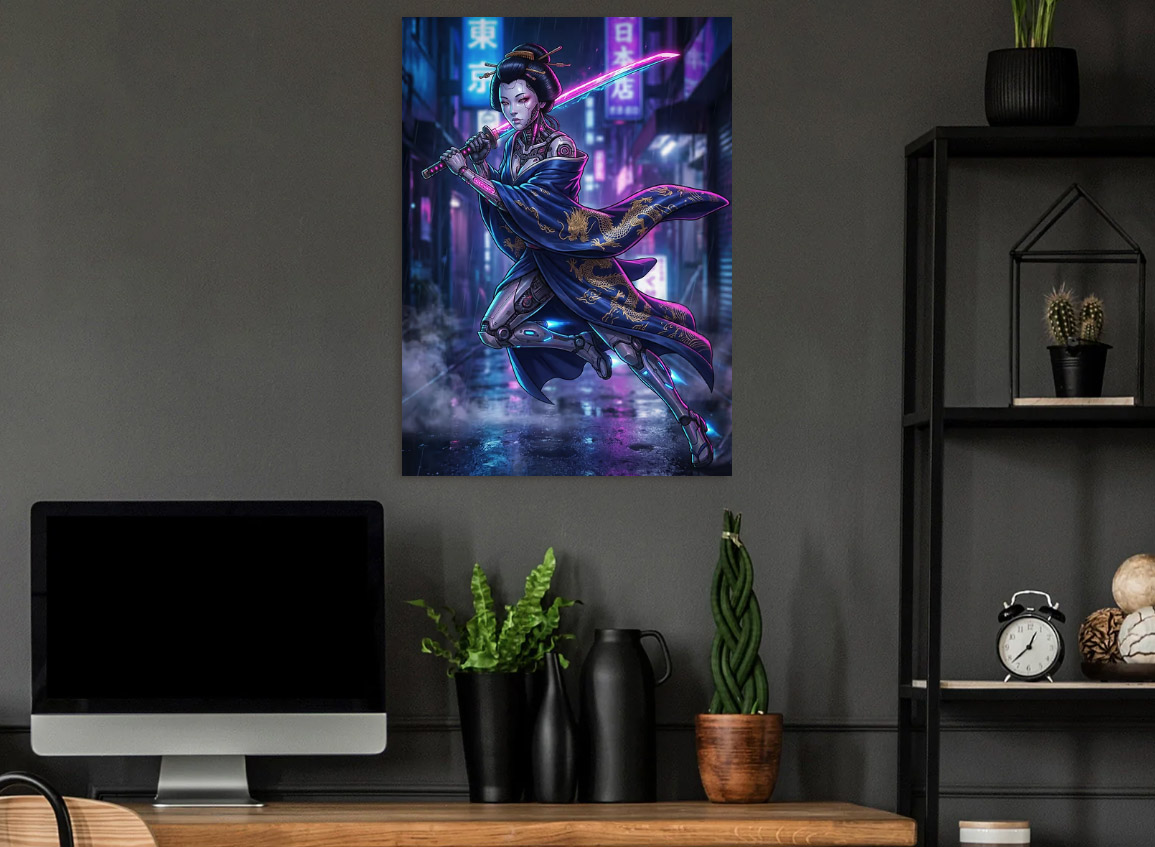
Neon-lit cityscapes, futuristic cars, cyberpunk samurai with glowing katanas. If your man cave doubles as a gaming or streaming room, this is almost always the right lane — cyberpunk pairs naturally with RGB lighting, modern furniture, and dark walls. My Cyberpunk Car in Neon City design is one of the more popular pieces from this category and works beautifully as an anchor above a desk or behind a sofa. See the full cyberpunk poster collection, my full cyberpunk room decoration guide, and — if gaming is a big part of the plan — my gaming room wall art guide.
Viking & Norse
Warriors charging into battle, longships in storms, mead-hall energy. Viking wall art is the most grounded option — it feels like something that actually belongs in a room with wool throws, iron candle holders, and dark wood furniture. My Furious Viking Warrior in Battle is a staple anchor piece for a Norse-themed man cave, and it pairs especially well with stained glass Thor or Valkyrie pieces as secondary art. See the Viking wall art collection and my Viking inspired room guide for the full Norse buildout.
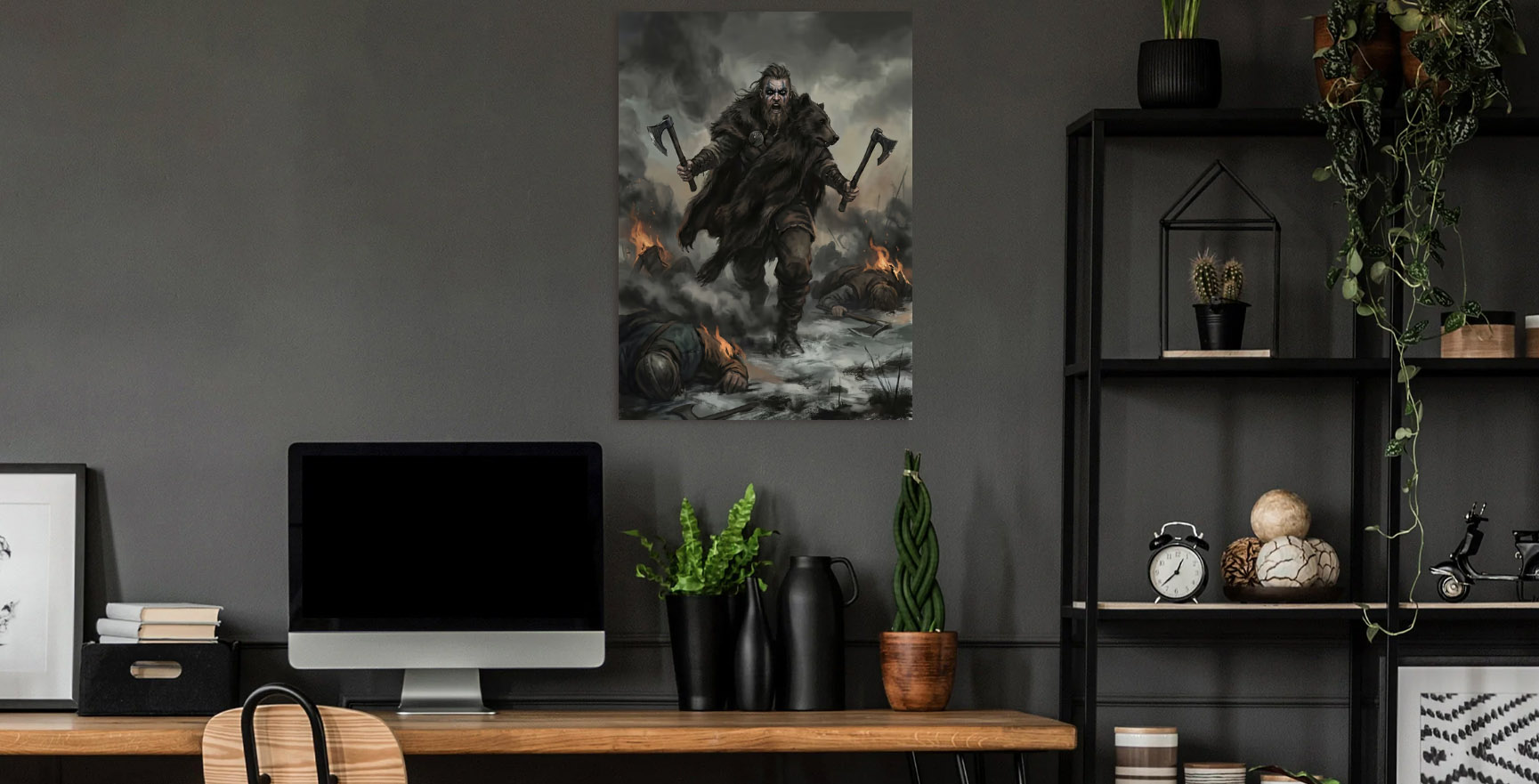
Featured: Furious Viking Warrior in Battle — my most-requested Norse anchor piece
Stained Glass & Cathedral Light
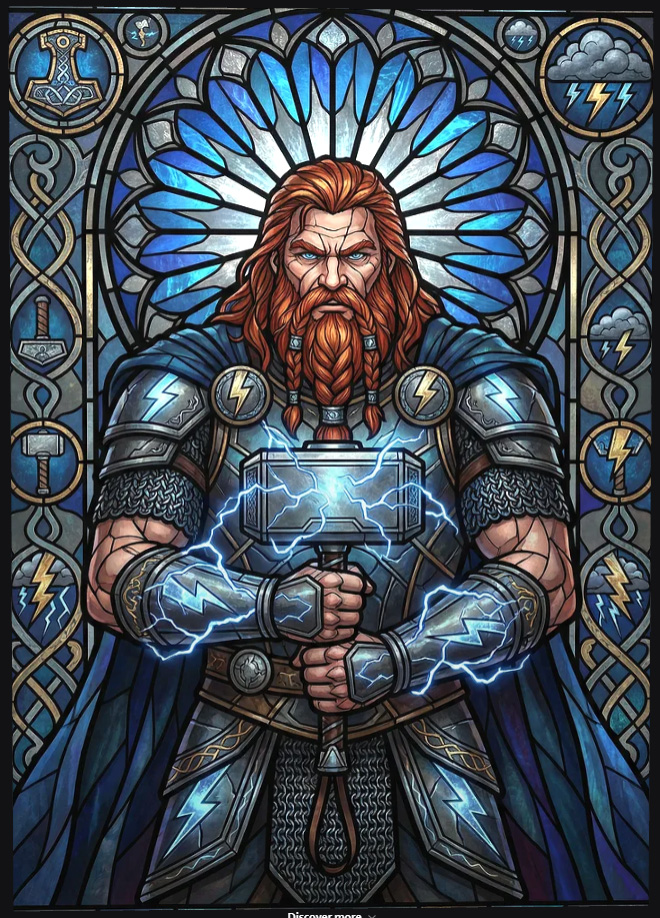
Thor with Mjolnir, Valkyrie warriors, dragons and D20 dice rendered in cathedral stained-glass style. This is the sleeper pick for man caves — it brings reverence and drama without going full dark-and-heavy, and it pairs with Viking, D&D, and dark fantasy pieces as secondary art on an adjacent wall. Cathedral-style stained glass on metal catches warm lighting in a way that mimics actual stained glass in low light, which is exactly what you want in a man cave with lamp-based lighting. Browse the stained glass wall art collection and my stained glass wall art guide for placement tips.
Military
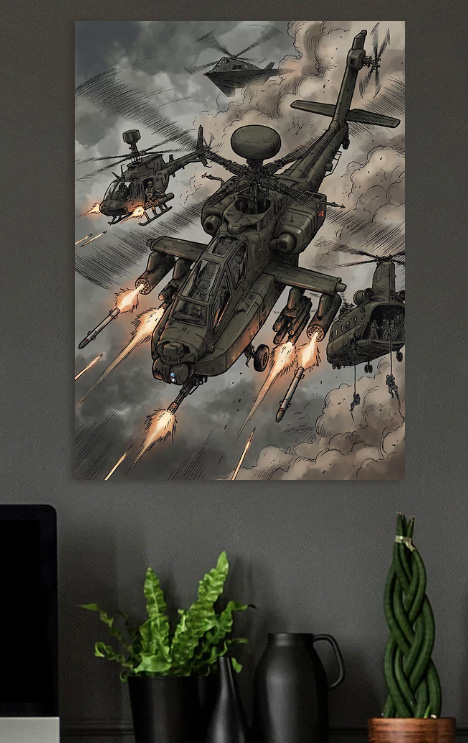
Combat helicopters, Vietnam war scenes, Spartan warriors, tactical operators. Military wall art brings historical weight and gravity to a room — it turns a man cave into something closer to a historian's study than a discount bar. It pairs well with dark leather, aged brass, and warm directional lighting. See the military wall art collection and the full military home decor room-by-room guide.
D&D & Medieval Fantasy
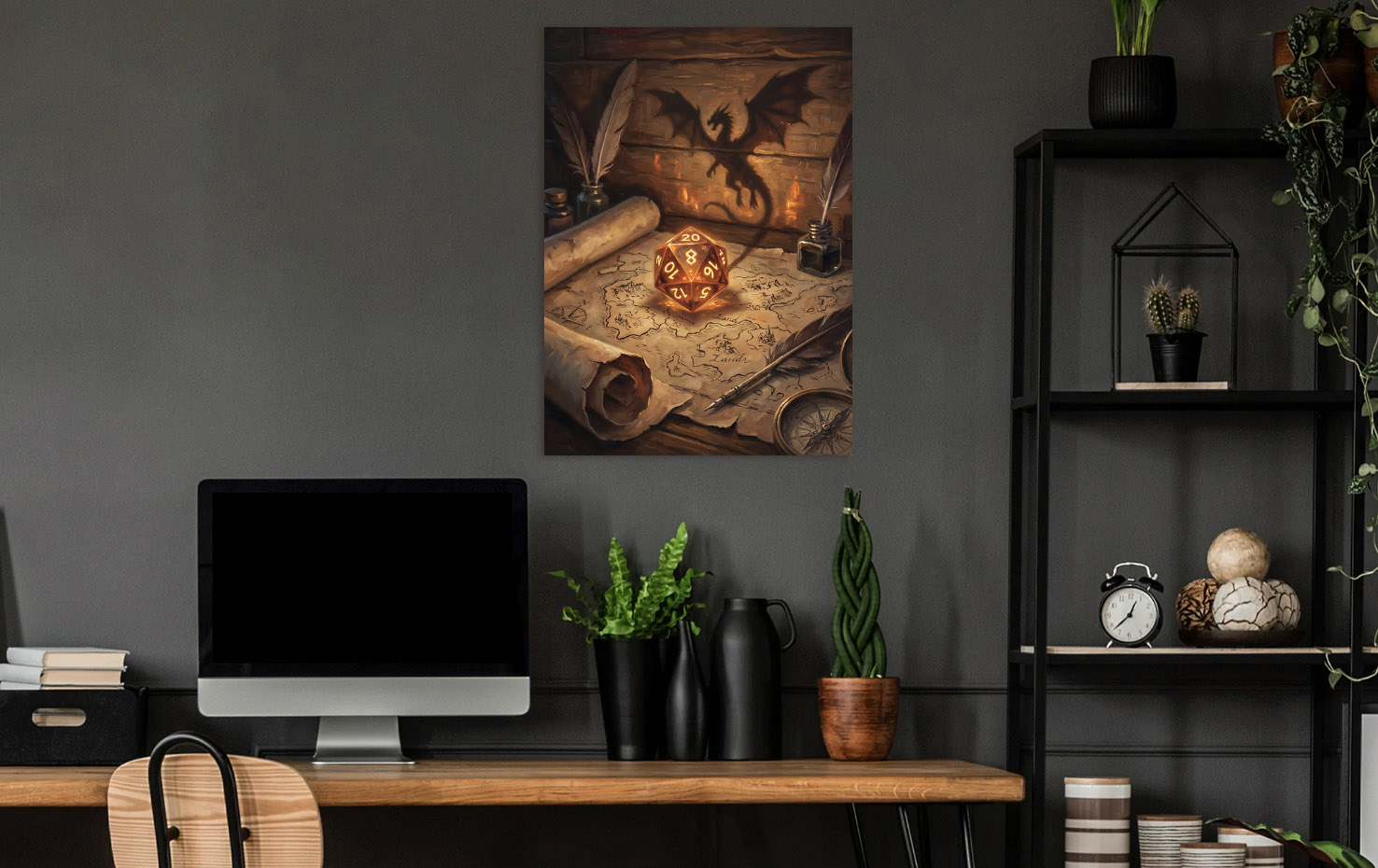
Knights before burning castles, dragons, dwarven forges, dungeon scenes. If your man cave is also a game room or you run a weekly D&D campaign from it, this collection bridges both worlds — read my gaming room wall art guide for the full crossover. D&D art pairs naturally with wooden tables, brass fixtures, and warm parchment-tone lighting. Browse the D&D wall art collection.
Samurai & Japanese Aesthetic
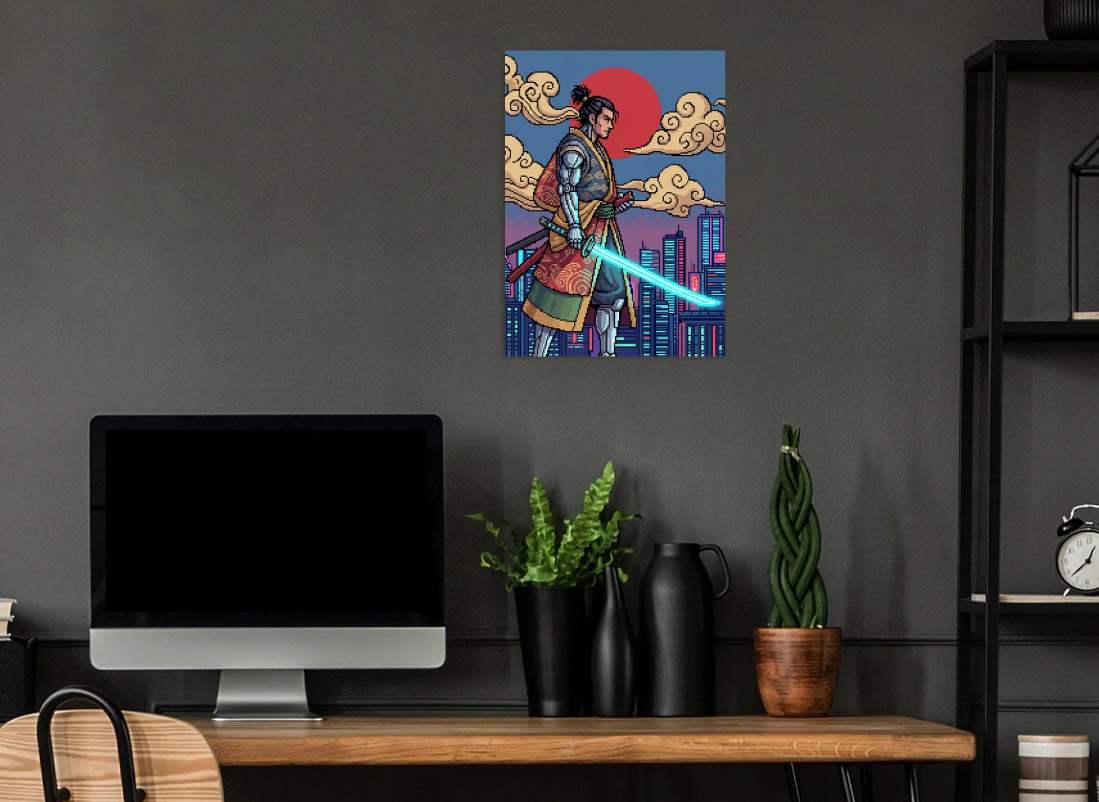
Lone samurai in snow, cyberpunk geishas, torii gates, ink wash styles. Samurai wall art is the most disciplined choice on this list — where the other themes lean maximalist, Japanese aesthetic leans minimal and precise. If your man cave is smaller or you prefer cleaner lines, this is the sweet spot. See the samurai poster collection and the Japanese wall art collection.
Retro Cars & Muscle
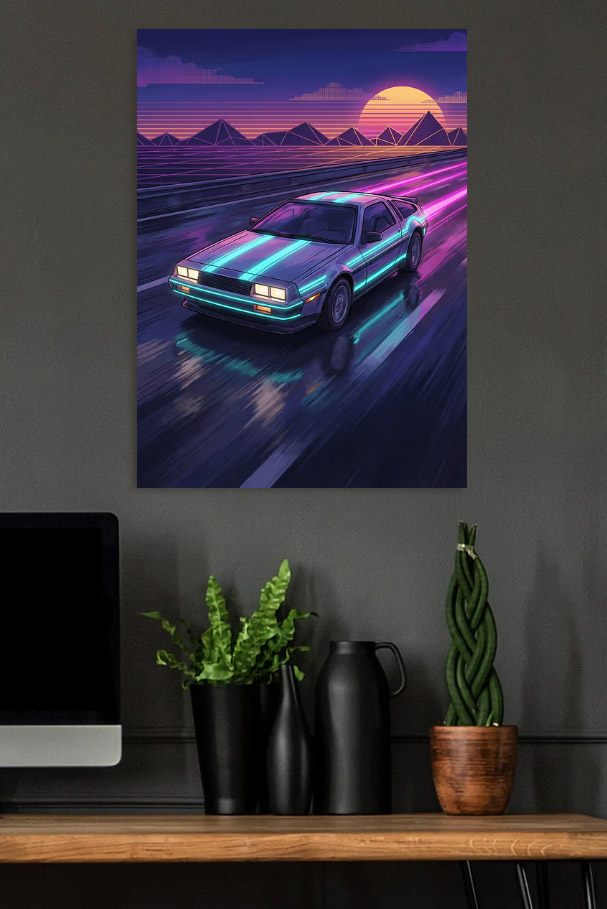
Muscle cars, DeLoreans, neon highway art. Perfect for man caves that double as garages, workshops, or 80s-nostalgia spaces. Retro cars also crossover surprisingly well with cyberpunk — both share the neon-and-chrome DNA. Browse the retro cars wall art collection.
Motivational & Stoic
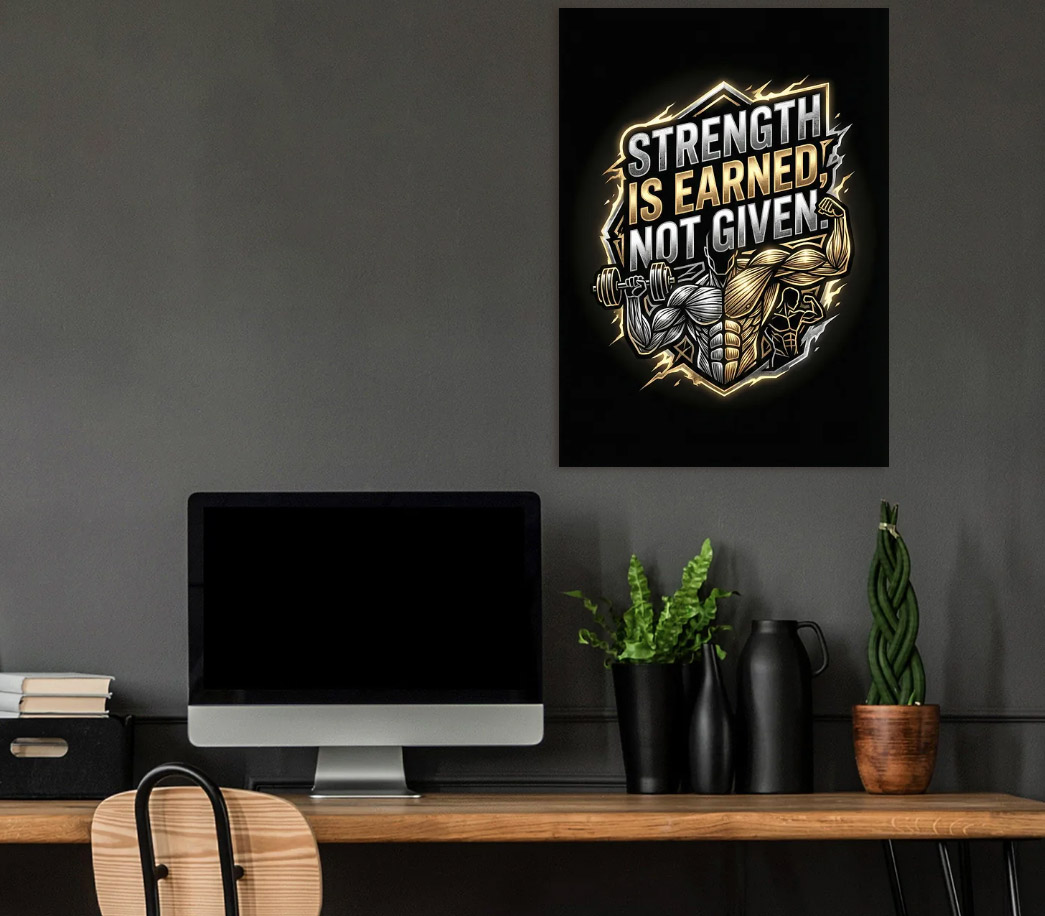
Stoic philosophy quotes, strength-and-ambition typography, disciplined minimalist prints. This theme is the odd one out on a list otherwise dominated by scenes and characters — but it's the single best pairing for a home-office man cave or a gym corner. It also works as secondary art next to Viking or military pieces, since Stoic philosophy and warrior culture share DNA. See the motivational wall art collection, especially the Stoic philosophy subcollection.
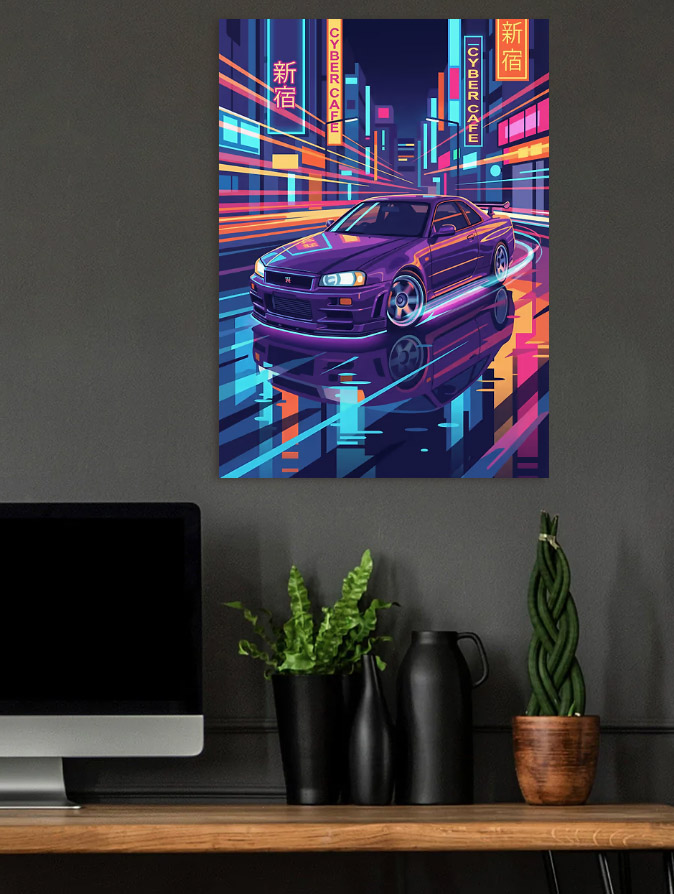
Featured: Cyberpunk Car in Neon City — one of my most popular crossover pieces
How to Pick Your Anchor Piece
Every good man cave has one piece of wall art that sets the tone for everything else. This is your anchor piece. Get this one right and the rest of the room falls into place. Get it wrong and you'll spend months trying to compensate with accessories.
Here's how to pick it:
- Start with mood, not design. What do you want this room to feel like when you walk in? Grounded and historical? Dark and mythological? Neon and futuristic? The mood picks the collection, not the other way around.
- Go L size (26.6" x 18.9") as a default. M size (17.7" x 12.6") almost always looks underscaled when it's the only piece in a room. L is large enough to anchor a wall without dominating it, and pairs well with later additions.
- Put it in the highest-visibility spot. The wall behind the TV, above the sofa, or behind the bar — wherever your eye goes first when you drop into the main chair.
- Pick something with a focal point. A single strong figure or scene (a barbarian king, a Viking warrior, a single car) works better as an anchor than a busy composition. The anchor should be immediately readable from across the room.
Sizing & Placement: The Part Most People Get Wrong
Two of the most common mistakes in man caves are hanging art too high and underscaling. Both instantly make a room feel like it was decorated by someone who didn't care — and both are fixable in fifteen minutes once you know the rules.
Height rule: The center of your wall art should sit at eye level when you're seated in the main chair — roughly 57–60 inches from the floor. This is lower than most people instinctively hang art, but it's the standard museums and galleries have used for decades (the Smithsonian and most major galleries hang centerlines at 57 inches specifically to accommodate a seated or average-standing viewer). Art at standing-eye-level looks cold and formal. Art at seated-eye-level feels like it belongs in the room.
Size rule: Match the scale of your largest piece of furniture. Above a full-size sofa or bed, go L or XL. Above a smaller chair or desk, M works. A single M-size piece on a huge blank wall almost always looks lost — in that situation, go bigger rather than adding filler pieces to cover the empty space.
Cluster rule: For gallery arrangements, treat the whole cluster as one unit and center it at seated eye level. Three pieces in a row, two stacked, or an asymmetric cluster all work — the only wrong answer is scattering pieces across the wall with no visual logic.
Man Cave Metal Art vs. Canvas vs. Paper
I've designed for all three materials, and for man caves specifically, man cave metal art wins on every dimension. Here's the honest breakdown:
- Light interaction: Man caves tend to have layered lighting — warm lamps, TV glow, LED accent strips, neon signs, bar lights. Metal reflects and plays with every light source in the room, making the art feel alive. Canvas absorbs light. Paper just sits there flat.
- Durability: The inevitable beer spill, cigar smoke, or humidity shift that ruins canvas does nothing to a metal poster. Metal handles decades of actual use, not just display.
- No-damage mounting: Displate's magnet mounting system means no nails, no drywall patches, no holes to explain when you rearrange next year. For a room that evolves, this matters a lot more than it sounds — especially if you rent.
- Sharp detail on digital art: The dark, high-contrast digital styles that define man cave aesthetic (cyberpunk, dark fantasy, military) look their absolute sharpest on metal because there's no canvas weave softening the image. Every detail stays crisp.
I wrote the full breakdown in my canvas vs metal prints comparison if you want the detail. For a man cave specifically, it's not even close — metal posters are the obvious choice.
Man Cave Decor Budget: Build It Out Over Time
You do not need to fill every wall on day one. The smartest man cave decor setups I've seen were built piece by piece over months, not in a single weekend shopping spree. Here's a realistic buildout order with actual 2026 pricing:
- Anchor piece ($59–89 with Club). One L-size metal wall art statement piece in the highest-visibility spot. This single purchase changes the room more than anything else you'll do.
- Warm lighting swap ($20–30). Replace overhead fluorescents with 2700K warm bulbs. Add a single table lamp or wall sconce with directional light aimed at the anchor piece. Total cost of transformation: less than a decent steak dinner.
- LED accent strip ($10–15). Cheap LED strip behind the metal poster for a halo glow effect. This turns your wall art into part of the room's lighting, not just decoration on top of it.
- Second and third pieces ($58–88 each with Club). Same collection as the anchor. Add on the adjacent wall or in a cluster next to the original. Two or three pieces from one collection is the sweet spot for most rooms.
- Aged-metal accents (variable). One brass lamp, one iron candle holder, one leather coaster set. Small supporting details that reinforce the aesthetic without adding more wall pieces.
Total for a fully-styled feature wall: under $200 with a Displate Club membership. That's less than most guys spend on a single gaming peripheral.
Pro tip: Displate runs sales throughout the year with 20–35% off, and the Club membership gives up to 34% off every purchase. Check my Displate discount codes guide before paying full price. If you're still deciding whether Displate is worth the investment, read my honest Displate review first.
What to Avoid in Man Cave Wall Art
A few things that look fine in isolation but destroy a room the moment you put them together:
- Mixing themes on the same wall. Cyberpunk next to Norse next to a framed jersey next to a beer sign looks like a dorm room. Pick one direction per wall and stay in it.
- Cheap novelty signs. "Man Cave" carved into fake wood, plastic beer signs, generic bar-themed prints. These date instantly and signal that the room wasn't actually thought through.
- Too many small pieces. Ten small posters scattered across a wall never look as good as two well-chosen L-size pieces. Fewer, larger, more intentional — every time.
- Hanging too high. Most men instinctively hang art above shoulder level when they should hang it at seated eye level (57–60 inches to the center). Too-high art makes the room feel cold and impersonal.
- Overhead fluorescents. Nothing destroys a man cave faster than a flat overhead panel light. Warm directional lighting is non-negotiable — this is the single biggest quick win in the entire buildout.
- Buying without a theme in mind. Every purchase should serve the mood of the room. If you can't explain why a piece fits your theme in one sentence, don't buy it.
Pairing Themes: What Works Together
The strict rule is one theme per wall, but across a larger man cave you can mix themes if they share tonal DNA. Here are the pairings that consistently work:
- Viking + Dark Fantasy — both lean mythological and earth-toned, share warriors and dramatic scenes
- Viking + Stained Glass — Thor and Valkyrie stained glass pieces double down on the Norse atmosphere
- Military + Viking — both lean historical and warrior-focused, share gravitas and grounded palettes
- Military + Motivational (Stoic) — strength and discipline themes reinforce each other
- Cyberpunk + Samurai — both lean dark and neon-lit, share the cyberpunk-samurai aesthetic directly
- D&D + Dark Fantasy — near-identical DNA, both lean medieval-mythological
- D&D + Stained Glass — D20 dice and dragons in cathedral stained-glass style tie the tabletop aesthetic together
- Retro Cars + Cyberpunk — both share the neon-and-chrome 80s-futurism aesthetic
What does NOT work: mixing bright cute-and-funny art with any of the above, mixing busy motivational typography with cyberpunk or dark fantasy on the same wall (too much visual competition), or mixing three or more themes in the same room. The emotional temperature has to stay consistent.
Build the Man Cave You Actually Want
A proper man cave costs less than most guys spend on peripherals or a weekend of beer. The difference between a spare room with a TV and a room people actually want to hang out in comes down to one thing: committing to a mood and letting the wall art carry it.
Every design in my collections is original, created by me, and built for the dark, high-contrast aesthetic that man caves live on. If you want the broader catalog, you can also browse all my metal wall art collections or visit my Displate artist profile. Otherwise, start with the collection that matches the mood you're going for — this is the best place to find cool men's wall art that actually commits to a theme instead of trying to please everyone:
- Dark Fantasy Wall Art — barbarian kings, dragons, fallen angels, mythological weight
- Cyberpunk Posters — neon cities, futuristic cars, cyberpunk samurai
- Viking Wall Art — Norse warriors, longships, mead-hall energy
- Stained Glass Wall Art — Thor, Valkyrie, D20 dice, cathedral light
- Military Wall Art — combat helicopters, historical warriors, tactical scenes
- D&D Wall Art — knights, dragons, mages, dungeon scenes
- Samurai Posters — lone warriors, ink wash styles, disciplined minimalism
- Retro Cars Wall Art — muscle cars, DeLorean, neon highway aesthetics
- Motivational Wall Art — Stoic philosophy, strength, discipline themes
The magnet mounting system means no holes in your walls — hang it, swap it, rearrange it whenever the room evolves. That's the real advantage of building your man cave decor one metal poster at a time, and it's why I recommend this approach to every reader who asks me how to turn a spare room into a man cave they actually want to spend time in.
Shop the Look
Browse metal wall art from the collections mentioned in this article. Prices start from $44.
Dark Fantasy Wall Art
22designs · From $44
Cyberpunk Posters
10designs · From $44
Viking Wall Art
11designs · From $44
Stained Glass Wall Art
34designs · From $44
Military Wall Art
15designs · From $44
D&D Wall Art
54designs · From $44
Samurai Posters
12designs · From $44
Retro Cars Wall Art
3designs · From $44
Motivational Wall Art
36designs · From $44
Frequently Asked Questions
What is the best wall art for a man cave?
The best man cave wall art is bold, dark, and committed to a single theme — not a scatter of cheap posters tacked up with whatever caught your eye at the time. Metal posters consistently outperform canvas and paper in a man cave because the metallic surface actively interacts with TV glow, LED strips, and warm lamp light, creating ambient shifts that make the room feel alive even when you're not looking directly at the art. The top themes for man caves are dark fantasy (barbarian kings, dragons, fallen angels), cyberpunk (neon cities, futuristic cars, samurai with glowing katanas), Viking and Norse (warriors, longships, battle scenes), military (combat helicopters, historical warriors, tactical operators), and retro cars (muscle cars, DeLorean, neon highways). The common thread across all of these is dark backgrounds, high contrast, and masculine weight — the opposite of the soft neutral wall art that fills most living rooms.
How do I decorate a man cave?
Start with one idea and let everything else serve it. The biggest mistake men make with man cave decor is treating the room as a dumping ground for random interests — a beer sign next to a football jersey next to a gaming poster next to a muscle car print. The result is visual chaos that feels like a teenager's bedroom. Instead, pick one direction (dark fantasy, cyberpunk, Norse, military, retro cars, Japanese aesthetic) and commit to it across the main sightlines. Use one L-size statement piece of wall art as the anchor, layer in warm 2700K lighting with a table lamp and LED accent strip, add one or two dark leather or aged-metal furniture pieces, and keep the color palette to three tones maximum. One strong theme with disciplined execution beats any amount of random man-cave merch — and it's cheaper too, because you stop buying stuff that doesn't fit.
What size wall art works best in a man cave?
L-size (26.6" x 18.9") is the sweet spot for most man caves. It's large enough to anchor a wall above a TV, sofa, bar, or pool table without dominating the room, and it scales well both as a solo statement piece and as part of a gallery. M-size (17.7" x 12.6") works for secondary pieces in a gallery arrangement or for smaller corner setups, but using M as your only piece in a room larger than a bedroom usually looks underscaled and hesitant. XL size (35.4" x 25.2") is worth it for dedicated entertainment rooms with high ceilings where one massive piece behind the main seating area becomes the entire design statement — but for most man caves, two L-size pieces create more visual interest than one XL. The rule of thumb: match the scale of your largest piece of furniture. Above a sofa or full-size bed, go L. Above a desk or smaller chair, M is fine.
Is metal or canvas better for man cave wall art?
For man caves specifically, metal wins on every practical dimension. First, light interaction: man caves tend to have lamps, LED strips, TVs, neon signs, or bar lighting — metal reflects and plays with all of it, while canvas absorbs light and sits flat. Second, durability: the inevitable beer spill, cigar smoke, or humidity shift that kills canvas does nothing to a metal poster. Third, mounting: Displate's magnet system means no nails, no holes, no patching drywall when you decide to rearrange next year. Fourth, detail: the dark, high-contrast digital art that defines man cave aesthetic (cyberpunk, dark fantasy, military) looks its sharpest on metal because there's no canvas weave softening the image. Fifth, masculinity of the material itself: metal simply feels more appropriate for the space than fabric. Canvas has its place for traditional art in a formal living room — but a man cave is not a formal living room. I wrote a full breakdown in my canvas vs metal prints comparison if you want the detail.
What are the most popular man cave themes?
Six themes consistently work in a man cave. One, dark fantasy — barbarian kings, dragons, fallen angels, skull fortresses. Brings mythological weight and drama, works especially well with leather chairs and warm firelight lighting. Two, cyberpunk — neon cities, futuristic cars, cyberpunk samurai. Pairs naturally with gaming setups, RGB, and modern furniture. Three, Viking and Norse — warriors, longships, mead-hall aesthetics. Grounded and masculine, pairs with wool throws and iron accents. Four, military — combat helicopters, Vietnam war scenes, Spartans, tactical operators. Brings gravitas and historical weight, suits home offices and studies as well as proper man caves. Five, retro cars and muscle — muscle cars, DeLorean, neon highways. Crossover with garage aesthetics and 80s nostalgia. Six, samurai and Japanese aesthetic — lone warriors in snow, torii gates, ink wash styles. Minimal and disciplined where the other themes are maximalist. Pick one and commit — the themes pair well in twos (Viking + dark fantasy, military + Viking, cyberpunk + samurai) but degrade fast if you try to mix three or more.
How much does good man cave wall art cost?
A serious man cave wall art setup costs less than most men spend on peripherals. Displate metal posters start from $44 for M size (17.7" x 12.6") and $89 for L size (26.6" x 18.9"). With a Displate Club membership (up to 34% off every purchase), the M size drops to around $29 and L to around $59. Seasonal sales throughout the year add another 20-35% off, and Black Friday is the biggest window of the year for deals. A realistic budget for a properly built man cave: one L-size anchor piece ($59-89 with Club) plus two M-size supporting pieces ($58-88 with Club) plus warm 2700K bulbs and an LED accent strip ($20-30) gives you a fully styled feature wall for under $200. That's less than the cost of a decent gaming keyboard. For perspective, mass-produced man cave signs and prints at $15-30 apiece add up fast and look cheap on the wall — one quality metal piece changes the room more than ten poster-store prints.
Where should I hang wall art in a man cave?
The highest-visibility spot is the wall you face when you walk in or drop into the main seat. In most man caves that's the wall behind the TV, above the sofa, or behind the bar. Hang your anchor piece here at eye level when seated — roughly 57-60 inches from the floor to the center of the art. For gallery arrangements, use the same eye-level rule for the center of the cluster. Avoid three common placement mistakes: hanging art too high (a very common mistake — above-eye-level placement makes the room feel cold and museum-like), cramming the art into a corner where the sofa or a lamp partially blocks it, and putting small pieces on huge walls where they look lost. If you have a large blank wall and only one piece, go bigger on the size rather than adding filler — one L-size piece on a big wall looks more intentional than four M-size pieces arranged to fill space.
More Articles
Best Cyberpunk Room Decoration Ideas for 2026
2026-03-23
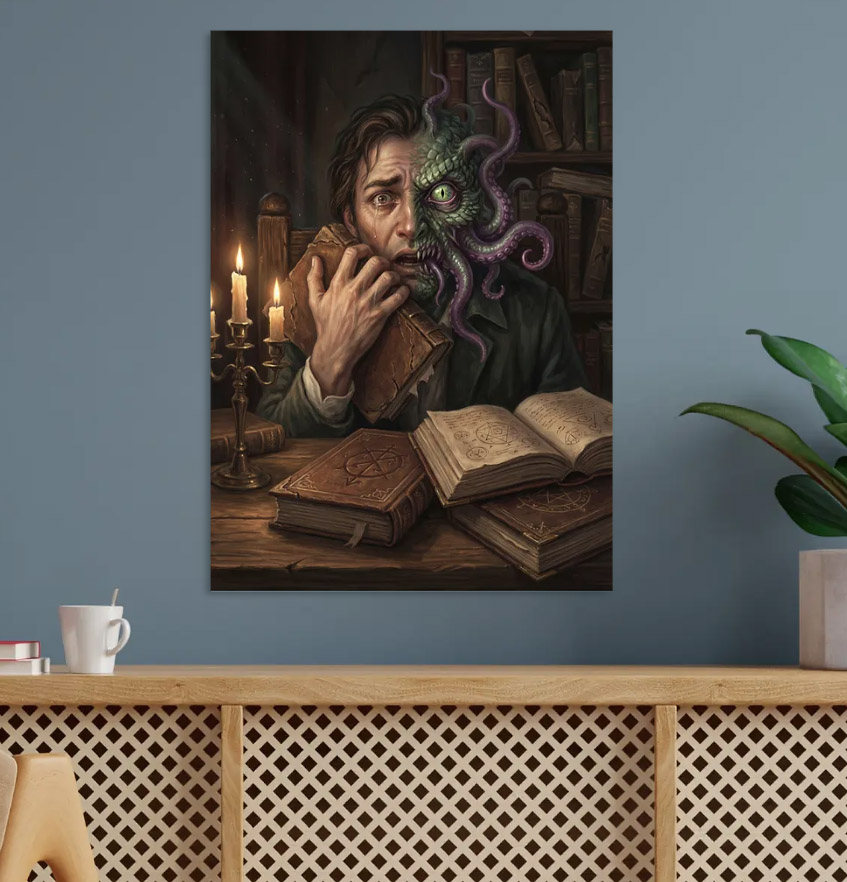
Dark Aesthetic Room Ideas: Gothic, Moody & Dark Academia Decor
2026-03-23

Is Displate Worth It? Honest Review from a Displate Artist
2026-03-23
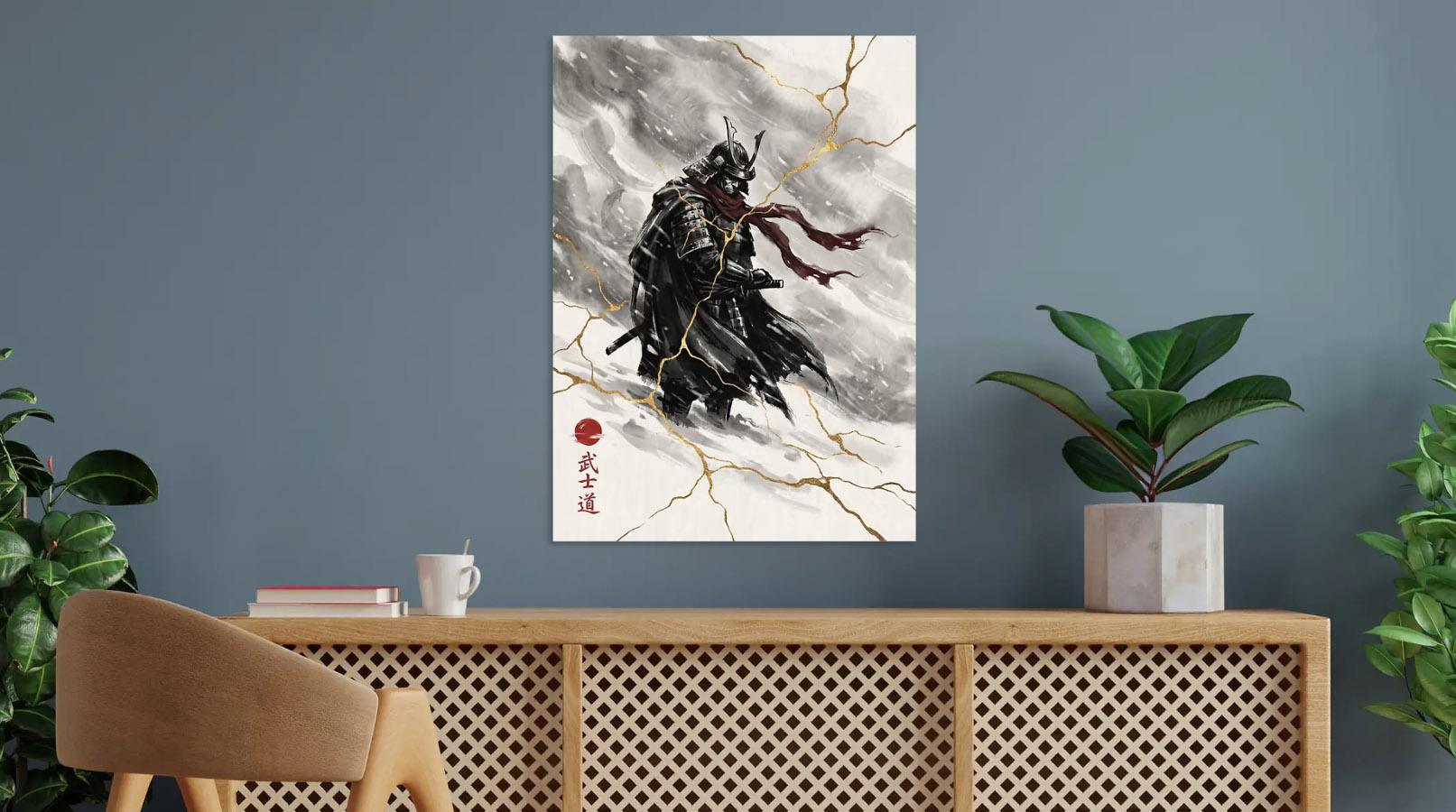
Canvas vs Metal Prints: Which Is Better for Wall Art?
2026-03-23
Displate Discount Codes & Deals 2026
2026-03-23
Best Wall Art for Gaming Room & Game Room Decor Guide
2026-03-29
Viking Home Decor & Inspired Room Ideas: A Norse Aesthetic Guide
2026-04-05
Stained Glass Wall Art: Modern Metal Posters with Cathedral Light
2026-04-05
Military Wall Art & Home Decor: A Room-by-Room Guide
2026-04-05